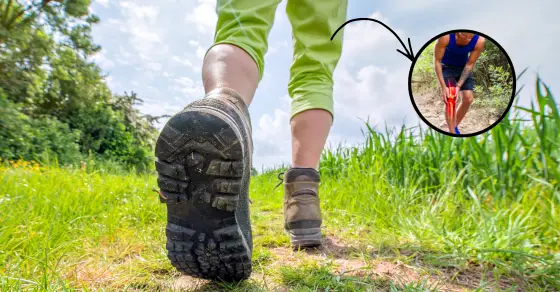
Your brain has automated forward walking so completely that your cerebellum runs the entire process without ever consulting you. Foot placement, stride length, hip extension timing, and arm swing are all computed entirely below your conscious awareness. You repeat this pattern identically 10,000 times a day.
But what happens when you simply turn around and walk in reverse?
Every single one of those automated computations fails. Suddenly, the cerebellum must rebuild the movement in real-time from scratch, using processing resources it hasn’t been asked to use in decades. There is a profound reason the neural circuits that run forward walking do not automatically run in reverse: no consolidated pattern for backward gait exists in your spinal cord.
For years, we have been told that walking 10,000 steps a day is the ultimate baseline for health. But for many, especially as they age, forward walking leads to knee pain, degraded balance, and a coasting brain. Here is the fascinating science behind why walking backwards fixes exactly what forward walking breaks—and why changing the shoes you wear while doing it might be the ultimate biohack.
The Neurological Trap of Forward Walking
To understand why reverse walking is so powerful, you have to understand what forward walking actually is at the neural level. The central pattern generators for locomotion reside in your lumbar spinal cord. These are neural circuits capable of producing the rhythmic flexion and extension of walking without any direct input from the brain.
Your brain does not command each step. It simply sets the parameters—speed, direction, and terrain—and the spinal pattern generators execute the movement.
By adulthood, forward walking is the single most practiced motor pattern in the human repertoire. You take an estimated 100 million steps per decade. Because of this, the neural pathways that control forward gait are heavily myelinated, deeply consolidated, and thoroughly automated. Walking requires almost zero cognitive engagement.
While this metabolic efficiency is great for survival, it is terrible for longevity.
The cerebellar circuits that compute balance, coordination, and real-time spatial adjustment are barely challenged. Your internal autopilot does not improve with practice; it coasts. The 65-year-old walking 5 kilometers a day on flat pavement is maintaining their heart health, but providing zero novel input to the motor control systems that degrade most with age. Forward walking maintains the minimum; it does not reverse the decline.
Rebuilding the Brain: What Reverse Walking Does to the Cerebellum
When you change direction and walk backward, the spinal pattern generators’ automated output vanishes. The cerebellum must now recompute every component of the gait cycle from scratch under novel constraints.
Foot placement must be calculated without visual confirmation. Your eyes face forward, but your feet move backward. The proprioceptive system (muscle spindles, joint receptors, and the nerves in the soles of your feet) must provide the spatial data that vision normally supplies. Hip extension timing reverses. Your ankle flexors reverse their roles. Your arm swing timing must invert to maintain rotational balance.
This computational load is categorically higher. Backward movement forces the cerebellum out of an execution state and into an active learning state. It recruits more circuits, generates more climbing fiber error signals, and drives incredible neuroplasticity.
In fact, novel movement patterns like backward walking have been shown to maintain cortical thickness in the brain. It activates the dorsolateral prefrontal cortex (managing working memory), the premotor cortex (planning movement), and the supplementary motor area (coordinating bilateral movement). These are the exact brain regions that naturally thin and degrade with age. Ten minutes of walking backwards is not just a leg workout; it is a targeted cognitive intervention.
The Biomechanical Fix: Saving the Knees
Perhaps the most immediate benefit of reverse walking is what it does to the joints. If you suffer from anterior knee pain, forward walking is often the culprit.
Forward walking generates ground reaction forces that load the knee in a very specific pattern. At heel strike, the quadriceps fire eccentrically (lengthening under load) to control knee flexion. During this phase, the patellofemoral joint experiences peak compressive force—up to twice your body weight during level walking.
When you do this 10,000 times a day, you drive the kneecap into the femoral groove at one angle, through one range, with one force vector. Cartilage relies on mechanical loading and unloading to pump synovial fluid for nutrition. Cartilage loaded in a single direction for decades accumulates damage on the overloaded surface and starves the underloaded surfaces.
In reverse walking, the biomechanics completely invert. Your foot contacts the ground with the forefoot or midfoot rather than the heel. The quadriceps fire concentrically (shortening under load). As a result, patellofemoral compressive force drops by an astonishing 30% to 40%.
For adults over 50 who have stopped walking because it “wears out their knees,” the science suggests a different reality: the knees aren’t worn out; they are directionally overloaded. Reverse walking introduces a loading vector that relieves the overloaded surfaces and nourishes the starving ones.
Reawakening Proprioception: The Balance Antidote
Forward walking heavily relies on vision. Your eyes scan the path ahead, and the cerebellum barely has to work to integrate your body’s position in space.
In reverse walking, the visual channel is eliminated. You cannot see where your feet are going. To compensate, the cerebellum must drastically increase its reliance on proprioceptive input. The mechanoreceptors in your ankles, knees, and hips must suddenly provide high-resolution spatial information.
This forces a massive recalibration of your sensory weighting. Proprioceptive acuity—the precision with which your nervous system detects joint position—rapidly declines with age. Reverse walking acts as a self-administered proprioceptive training protocol. Studies show that just 4 to 6 weeks of reverse walking drastically improves single-leg balance and functional mobility in older adults.
Interestingly, researchers found that walking backwards actually makes people better at walking forwards. By upgrading the baseline integration circuitry and challenging the nervous system, your forward stride length, gait speed, and symmetry all naturally improve.
How to Start Walking Backwards Safely
The biggest hazard of backward walking is, obviously, tripping over what you cannot see. Safety is paramount.
The best way to start is in a controlled environment. Use a clear hallway at home, a running track with visible lane lines, or a treadmill. A treadmill is highly effective because it removes obstacle hazards. Keep the speed at approximately 50% of your comfortable forward walking pace.
Start with just 2 to 3 minutes per session. The adaptation curve is incredibly steep at the beginning. During your first session, you will feel unstable, hyper-aware, and awkward. This is the intervention working. The instability is the exact signal forcing your cerebellum to adapt.
Why You Must Ditch Normal Shoes to Reap the Full Benefits
We have established that reverse walking works by spiking proprioceptive demand—forcing the nerves in your feet and joints to feel the ground and send high-definition signals to your brain.
But there is a massive problem: If you are wearing modern athletic shoes, you are blindfolding your feet.
You cannot fully reawaken the mechanoreceptors in your soles if they are buried under two inches of synthetic foam, artificial arch support, and rigid heel counters. Traditional shoes act like casts. They alter your natural biomechanics, weaken your intrinsic foot muscles, and completely blunt the sensory feedback your cerebellum so desperately needs during novel movements like backward walking.
If you want to truly fix what forward walking breaks, you have to change how your foot interacts with the earth. This is why transitioning to barefoot minimalist shoes is the ultimate upgrade to your physical health.
The Anatomy of a Minimalist Shoe
True minimalist footwear, often called barefoot shoes, are designed around the biological reality of the human foot, not fashion trends. They share three distinct characteristics that traditional sneakers lack:
1. Zero-Drop Heels Look at a standard running shoe. The heel is elevated significantly higher than the toes. This “heel drop” shifts your center of gravity forward, forces you into an unnatural anterior pelvic tilt, and artificially shortens your Achilles tendon and calf muscles. Barefoot shoes are “zero-drop,” meaning the heel and the ball of the foot are on the exact same level. This restores your natural posture and aligns your spine as nature intended.
2. A Wide, Anatomical Toe Box Most shoes taper to a point at the front, actively squeezing your toes together. This leads to bunions, poor balance, and restricted blood flow. Your toes are meant to splay out wide to provide a stable, gripping foundation. Minimalist shoes feature a wide toe box that allows your foot to expand naturally with every step, dramatically improving your stability—which is incredibly helpful when learning to walk backwards.
3. Ultra-Thin, Flexible Soles The magic of proprioception lies in feeling the ground. When you step on a pebble, a change in elevation, or a texture shift, your foot is supposed to flex and send instant data to your brain. Thick foam soles absorb this data, deadening your nervous system’s response. Minimalist shoes utilize thin, highly flexible soles that protect you from cuts and extreme temperatures while allowing your foot to bend, flex, and feel the earth.
Building Bulletproof Feet
When you take away the artificial support of modern shoes, something amazing happens: your body starts doing its own job again. The intrinsic muscles, tendons, and ligaments of your foot and ankle are forced to wake up and support your weight.
At first, walking in barefoot shoes might make your feet and calves tired. That is because muscles that have been trapped in a padded cast for decades are finally working out. Over time, your arches strengthen, your foot becomes more robust, and the impact forces of walking are absorbed properly by the biological springs of your legs, rather than being shoved directly up into your knees and lower back.
Combining the joint-saving, brain-boosting power of reverse walking with the sensory awakening of barefoot shoes is a recipe for lifelong mobility.
The Xero Shoes Difference
When it comes to transitioning into the world of barefoot footwear, not all brands are created equal. You want a shoe that provides durability, flexibility, and a style that you can actually wear every day without looking like you are wearing toe-socks.
This is why Xero Shoes is the undisputed leader in the minimalist footwear space.
Created with a “foot-first” design philosophy, Xero Shoes offer an incredibly diverse lineup of footwear—from performance running shoes and rugged hiking boots to casual everyday sneakers and sandals. Every single pair features a zero-drop profile, a wide toe box, and their patented FeelTrue® sole, which comes with a 5,000-mile warranty.
If you are going to invest time into rewiring your brain and saving your knees with reverse walking, do not sabotage your progress by stuffing your feet into restrictive, padded sensory-deprivation chambers. Let your feet feel the world. Let your toes spread. Let your cerebellum receive the high-definition sensory input it is starving for.