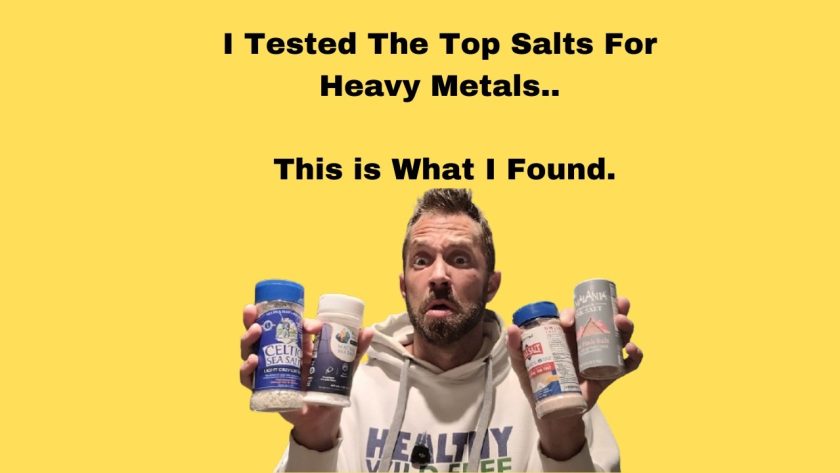
Chapter 1: Intro: Why salt may not be as healthy as you think
If you are like most health-conscious people, you probably ditched highly processed, bleached white table salt years ago. You made the switch to expensive, beautifully colored salts because the health and wellness industry told you they were packed with essential trace minerals and electrolytes.
We have all seen the massive bags of pink Himalayan salt, the deeply colored red salts, and the damp, grayish sea salts lining the shelves of high-end grocery stores. We sprinkle them on our food, we mix them into our morning water for hydration, and we trust that we are doing our bodies a favor.
But what if the very health food you are consuming every single day is secretly sabotaging your biology?
There have been growing reports and lab tests circulating online claiming that some of the most popular “healthy” salts on the market are actually contaminated with toxic heavy metals. Today, we are not just going to talk about these rumors—we are going to put these premium salts to the ultimate test.
Here is exactly what we are going to do. We are going to take the top-selling health salts on the market and test them individually for heavy metal contamination using a powerful magnetic surface. We will press a strong magnet directly into each pile of salt to see if anything sticks.
Why a magnet? Because iron, cobalt, and nickel are three heavy metals that are highly magnetic.
You might be thinking, “Wait, iron isn’t bad! We need iron in our blood, right?” While our bodies do require bioavailable iron from whole foods, consuming inorganic, earth-mined iron oxide (essentially rust) can lead to iron toxicity, liver stress, and intense cellular oxidation. Furthermore, if a salt contains enough magnetic earth metals to physically stick to a magnet, it is a massive red flag that it likely contains other non-magnetic heavy metals like lead, arsenic, and cadmium.
With that terrifying reality in mind, let’s grab our magnet and put these famous salts to the test.
Chapter 2: Himalayan Salt tested: surprisingly high heavy metal content
The first salt on our chopping block is the undisputed king of the health food world: Pink Himalayan Salt.
Himalayan salt is incredibly famous, but it is crucial to understand where it actually comes from. It is not harvested from a pristine ocean. It is mined deep within the earth, primarily from the Khewra Salt Mine in Pakistan, which is located in the foothills of the Himalayan mountain range. It is an inland, earth-mined salt.
That beautiful, aesthetic pink color that everyone loves? That color does not come from magical health-promoting electrolytes. The pink and red hues are a direct result of the salt’s physical contact with earth minerals, specifically iron oxide.
So, we took our strong magnet and pressed it firmly into a pile of fine-grain pink Himalayan salt.
The results were immediate and incredibly concerning. When we pulled the magnet away, a significant amount of the pink salt was physically stuck to the magnetic surface. It didn’t just casually cling to it; when we shook the magnet, the salt stayed firmly attached.
This proves beyond a shadow of a doubt that there are concentrated metallic elements within this salt. For a product that people consume daily for “health,” seeing the granules literally magnetize and stick to a piece of metal is a massive wake-up call. I carefully wiped the magnet completely clean to ensure a blank slate for the next contender.
Chapter 3: Redmond Real Salt results: also showing concerning levels
Next up is another massive player in the holistic health space: Redmond Real Salt.
Similar to Himalayan salt, Redmond Real Salt is heavily marketed as an ancient, unrefined, and mineral-rich option. And just like Himalayan salt, it is an inland, earth-mined product. It is extracted from an underground salt deposit in Utah. If you look closely at a pinch of Redmond Real Salt, you will notice it is not purely white; it is speckled with dark red, brown, and pink flecks.
We took our freshly cleaned magnet and pressed it down firmly into the pile of Redmond Real Salt, ensuring good surface contact.
Once again, we had salt granules actively sticking to the magnet.
So far, the first two tests have yielded the exact same disturbing result. The two most popular earth-mined salts on the market both contain enough iron, nickel, cobalt, or other magnetic trace elements to physically bind to a magnet. If these metals are heavy enough to stick to a magnet in a simple visual test, you have to ask yourself what they are doing when they accumulate inside your liver, brain, and soft tissues over years of daily consumption.
Chapter 4: Celtic Salt test: high readings but no magnetic reaction, still questionable due to clay-bed drying
Moving away from the earth-mined salts, we shift our focus to Celtic Sea Salt. This salt is incredibly popular, especially for its high moisture content and light grayish color.
We pressed the magnet into the Celtic salt, and surprisingly, nothing really stuck to the surface.
On the surface, this might seem like a massive win for Celtic Sea Salt, but there is a major catch. First, the grain size of the Celtic salt we tested was much coarser and heavier than the fine powders of the Himalayan and Redmond salts. It is highly possible that the sheer weight of the larger, moisture-dense salt crystals was simply too much for the magnet to lift, masking the presence of the metals.
More importantly, you have to understand how Celtic Sea Salt is processed. It is harvested from the ocean, but it is traditionally dried in clay beds lining the shore. The grayish color of the salt is literally the clay from the earth leaching into the salt crystals.
Why is that a problem? Because natural clay is notoriously high in heavy metals, specifically aluminum, cadmium, and lead. While it passed our crude magnet test, third-party laboratory analyses of Celtic salt often reveal concerning levels of these non-magnetic heavy metals due to the clay-bed drying process. We will dive deeper into those lab tests shortly.
🛑 STOP Eating Toxic Salt! Upgrade to the Purest Options on Earth
If you are currently using Himalayan, Redmond, or Celtic salt, it is time to throw them in the trash. Stop gambling with heavy metal accumulation and microplastics. Upgrade your daily hydration and cooking with the absolute cleanest, lab-tested sea salts available.
👉 Visit Colima Salt (My #1 Choice!): https://news.avajanespages.com/aff_c?offer_id=4&aff_id=1096
(Lowest in Heavy Metals and ZERO Micro-plastics)
👉 Visit Baja Gold Salt (My #2 Choice): https://www.bajagoldsaltco.com/?rfsn=8062928.1f614fb
🔥 Use Discount Code: HEALTHYWILDFREE (You can use this to save on EVERY order so save it!)
Chapter 5: The Magnet Test Explained: Why I avoid salts that dry in clay beds
To truly grasp the gravity of this experiment, we need to understand the fundamental difference between earth-mined salts and properly harvested sea salts.
The earth-mined salts (Himalayan and Redmond) are highly discolored. They are red, pink, and dark brown. Where are heavy metals found in nature? They are mined from deep within the earth’s crust. When you consume an earth-mined salt, you are not just getting sodium chloride and electrolytes; you are consuming all the dirt, iron oxide, and heavy metals that have been compressed into that underground rock over millions of years.
This is exactly why the red and pink salts stuck to the magnet. The red color literally is the metal.
Sea salts, in theory, should be much cleaner because they are evaporated from ocean water, not dug out of a mountain. However, the drying process is critical. When companies like Celtic dry their ocean water in coastal mud and clay beds, the salt acts like a sponge, absorbing the heavy metals present in the soil.
This is why color is an incredible indicator of purity. The more discolored, grayish, reddish, or brownish a salt is, the more contaminated it likely is with earth minerals that your body does not want or need.
Chapter 6: Baja Gold Sea Salt: Low heavy metals, a much safer option
Next, we tested Baja Gold Sea Salt. This salt is harvested from the pristine waters of the Sea of Cortez in Baja California, Mexico.
Unlike the clay-bed drying of other brands, Baja Gold utilizes a natural, solar evaporation process that prevents excessive contamination from terrestrial dirt and clay.
We took our magnet and pressed it firmly into the Baja Gold. Absolutely nothing stuck. It was completely clear.
But we don’t just rely on a magnet. When you look at the independent, third-party laboratory test results for Baja Gold, the data backs up the physical test. Baja Gold tests incredibly low for toxic heavy metals across the board. Because it is sourced from a vibrant, mineral-rich body of water, it boasts an incredibly high profile of over 90 bioavailable trace minerals and electrolytes without the dangerous metallic baggage found in the earth-mined alternatives.
Baja Gold is a massive green light. It is safe, it is clean, and it actually supports cellular hydration instead of bogging down your liver with toxins.
Chapter 7: Colima Sea Salt: Scored the lowest in heavy metals, the healthiest salt tested
Finally, we tested Colima Sea Salt. This salt is also hand-harvested in Mexico, specifically from the ancient salt lagoons of Colima. It is gathered by traditional “salineros” who have been using the same pure, solar evaporation methods for generations.
We pressed the magnet into the Colima salt multiple times to be absolutely sure. Nothing stuck. Not a single grain.
But the Colima sea salt goes far beyond just passing a magnet test. When you look at the comprehensive lab data comparing all the major salt brands on the market, Colima Sea Salt consistently scores the absolute lowest in all toxic heavy metals.
Furthermore, we have to talk about the elephant in the room regarding sea salts: Microplastics. Our oceans are unfortunately polluted, and many modern sea salts contain microscopic shards of plastic that can disrupt your endocrine system and hormones. Colima Sea Salt is rigorously tested and verified to be 100% microplastic-free.
It is brilliantly white, meaning it isn’t contaminated with red iron or gray clay. It has a beautiful, crisp, clean flavor that completely blows the bitter, metallic taste of earth salts out of the water. Simply put, Colima Sea Salt is the highest quality, cleanest, and safest salt you can possibly put into your body.
Chapter 8: Comparing all salts: Arsenic, cadmium, mercury, aluminum levels side by side
If you want to optimize your biology, you have to look at the hard data. When independent labs test these salts for the “Big Four” heavy metals—arsenic, cadmium, mercury, and aluminum—a very clear hierarchy emerges.
- Earth-Mined Salts (The Red Flags): Himalayan and Redmond Real Salt regularly show elevated levels of iron, aluminum, and other trace earth metals. The visual magnet test confirms their highly metallic nature.
- Clay-Dried Salts (The Gray Area): Celtic Sea Salt often shows concerning levels of aluminum and lead in lab tests due to its contact with coastal clay mud, despite its popularity.
- Pristine Sea Salts (The Green Lights): Baja Gold and Colima Sea Salt test at the absolute bottom of the spectrum for all heavy metals. They are cleanly evaporated without heavy soil contact, providing massive amounts of magnesium, potassium, and calcium without the toxic payload.
The science and the physical tests align perfectly: the closer your salt is to pure, pristine ocean evaporation (resulting in a clean, white crystal), the safer it is for your long-term health.
Chapter 9: Final thoughts: Safest options for everyday use
What should you take away from this investigation? The truth is, the wellness industry has successfully marketed highly contaminated dirt and rust as a premium health product.
Earth salts are a definitive no-go. If your salt is pink, red, or sticky to a magnet, it does not belong in your kitchen. Throw the Himalayan and the Redmond Real Salt off the table completely. Do not cook with them, and whatever you do, do not dissolve them in your morning water for hydration. You are essentially drinking a heavy metal cocktail.
Even the grayish Celtic salt, while slightly better, still carries too much risk from its clay-bed processing for me to comfortably recommend it.
I only use and trust two salts for my personal health, my cooking, and my family: Colima Sea Salt and Baja Gold Sea Salt.
Colima is my undisputed number one choice. It has the lowest heavy metal profile in the world, zero microplastics, and an unmatched, crunchy, clean flavor profile. Baja Gold is a fantastic runner-up, providing a massive spectrum of safe ocean minerals.
Stop poisoning yourself with aesthetic, trendy salts. Make the switch to clean, tested, and pure sea salt today. Your liver, your brain, and your cellular health will thank you.
Ready to Detox Your Pantry? Get the Best Salts on the Planet Below
Do not wait until you finish your current bag of toxic pink salt. Throw it out and secure a bag of pure, lab-tested, unrefined sea salt right now.
👉 Upgrade to Colima Salt Here (My #1 Choice!): https://news.avajanespages.com/aff_c?offer_id=4&aff_id=1096
(Lowest in Heavy Metals and ZERO Micro-plastics)
👉 Try Baja Gold Salt Here (My #2 Choice): https://www.bajagoldsaltco.com/?rfsn=8062928.1f614fb
🔥 IMPORTANT: Make sure to use the Discount Code HEALTHYWILDFREE at checkout! You can use this code to save money on every single order you place, so save it in your phone or write it down!
Have you been using pink Himalayan salt or Redmond Real Salt? Did this magnet test surprise you? Let me know your thoughts in the comments below, and make sure to share this article with anyone you know who still uses pink salt!