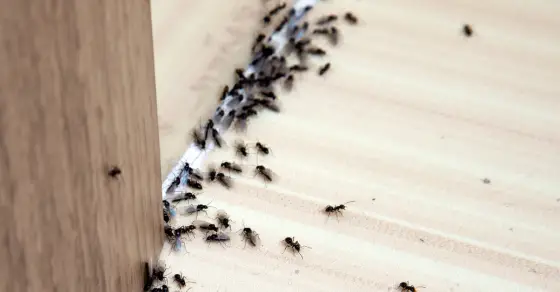
If you’ve ever sprayed your home for spiders, flies, moths, or other pests—only to see them return weeks later—you’re not alone.
Most people assume pests show up randomly.
That they’re intruders.
That the solution is stronger sprays, harsher chemicals, or repeated extermination.
But that assumption is wrong.
Pests don’t enter homes by accident.
They respond to conditions—and modern homes are full of them.
Why Pests Keep Coming Back in Modern Homes
Insects and rodents don’t look for houses.
They look for signals.
Those signals include:
Moisture
Residue
Odors
Warmth
Chemical buildup
When these conditions exist, pests don’t need an invitation.
They move in naturally.
This is why killing bugs without addressing the environment almost never works long-term.
You’re removing the symptom, not the cause.
And symptoms always come back.
The Comfort Illusion of “Effective” Pest Sprays
Chemical sprays feel effective because they act fast.
You spray.
The pests disappear.
Problem solved—temporarily.
That short-term relief creates a false sense of success.
But here’s what most people don’t realize:
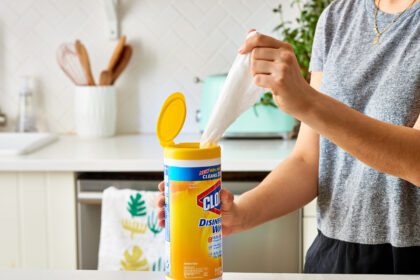
Chemical sprays leave residue.
Residue mixes with moisture.
Moisture feeds mold and biofilm.
Biofilm creates odor and microbial buildup.
Those conditions attract new pests.
So while it feels like you’re fixing the issue, you’re often reinforcing the very environment that caused it.
Why Chemical Pest Control Fails Long-Term
On top of being temporary, chemical pest sprays introduce new problems.
Many of them:
Pollute indoor air
Irritate skin and lungs
Linger on surfaces
Accumulate over time
Especially in closed spaces like bathrooms, kitchens, and laundry rooms.
This creates a cycle most people never question:
Spray → temporary relief → residue buildup → pest return → spray again
It’s not a solution.
It’s dependency.
What Actually Attracts Pests Indoors
Ever notice pests tend to show up in the same areas?
Bathrooms.
Laundry rooms.
Under sinks.
Near drains.
That’s not coincidence.
These spaces combine:
Constant moisture
Warm temperatures
Chemical residue
Limited airflow
Which makes them ideal habitats—not just entry points.
Pests don’t need crumbs everywhere.
They need the right micro-environment.
And modern homes unknowingly provide it.
The Environmental Mistake Most Homes Make
Most pest control advice focuses on elimination.
Very little focuses on prevention.
But prevention doesn’t start with killing pests.
It starts with removing what attracts them.
That means looking at things most people ignore:
Water quality
Cleaning residue
Chemical exposure
Airflow
Surface buildup
This is where natural pest control for the home actually begins.
Natural Pest Control Starts With Your Home Environment
If pests are responding to environmental signals, then the solution isn’t stronger poison.
The solution is changing the environment.
Real, natural pest control focuses on:
Reducing chemical residue
Controlling moisture
Eliminating buildup
Improving air and surface cleanliness
When these conditions change, pests stop showing up—not because they were killed, but because there’s nothing pulling them in.
Why Water Quality Matters for Non-Toxic Pest Control
Most people never think about this, but the water running through your home plays a major role in pest attraction.
Municipal water is treated with chemicals like chlorine—not just for drinking, but for:
Showering
Cleaning surfaces
Washing bathrooms and floors
Over time, this water:
Leaves residue on tiles and walls
Contributes to odor and biofilm
Creates damp, chemical-rich surfaces pests are drawn to
Bathrooms quietly become ground zero.
You can scrub constantly and still lose—because the residue keeps returning.
You Can’t Spray Your Way Out of a Chemical Problem
This is the contradiction most households live in.
They spray chemicals to solve problems caused by chemicals.
More spray doesn’t cancel out residue.
It compounds it.
And pests don’t care how expensive or powerful the product was.
They care about conditions.
A Smarter, Chemical-Free Way to Protect Your Home
If you’re serious about keeping pests away naturally, you need to reduce the conditions that attract them in the first place.
That’s why addressing water quality—especially in bathrooms—makes sense.
It’s one of the biggest contributors to residue, moisture, and buildup in the home.
Why We Recommend the Omica Organics Shower Filter
Instead of constantly spraying chemicals in pest-prone areas, a more effective approach is reducing chemical buildup at the source.
The Omica Organics Shower Filter helps do exactly that by reducing chlorine and chemical residue in shower water.
This can help:
Minimize residue on bathroom surfaces
Reduce odor and biofilm buildup
Support a cleaner, less pest-friendly environment
Lower overall chemical exposure in your home
This isn’t a pest spray.
It’s not an extermination tool.
It’s an environmental upgrade—one that aligns with non-toxic, natural pest control principles.
If you’re already trying to reduce chemicals in your home, this is a logical place to start.
👉 Check out the Omica Organics Shower Filter here
Use discount code: HealthyWildFree
Clean Living Goes Beyond Pest Control
Once you start understanding how invisible chemicals affect your home, something shifts.
You stop chasing quick fixes.
You start thinking in systems.
And that mindset doesn’t stop at sprays or bathrooms—it naturally extends to your kitchen.
Why Reducing Household Toxins Also Applies to Food
Just like chemical sprays leave residue in your home, heavily processed foods introduce unnecessary contaminants into your body.
Refined table salt is a perfect example.
It’s stripped, bleached, and chemically altered—then marketed as “pure.”
But purity isn’t about what’s removed.
It’s about what’s preserved.
Why We Also Recommend Ava Jane’s Kitchen Colima Sea Salt
If you’re choosing a cleaner, more intentional home environment, your kitchen should reflect that same philosophy.
Ava Jane’s Kitchen Colima Sea Salt is:
Unrefined
Hand-harvested
Naturally mineral-rich
Free from industrial processing
It represents the same principle as natural pest control:
less interference, fewer chemicals, better outcomes.
This isn’t about salt being a “health food.”
It’s about choosing simplicity over industrial processing—inside your home and inside your body.
👉 Explore Ava Jane’s Kitchen Colima Sea Salt here
The Takeaway: Prevention Is the Best Natural Pest Control
Pests aren’t stubborn.
They’re responsive.
They respond to:
Moisture
Smell
Residue
Environment
When you remove what attracts them, they leave—without the need for toxic sprays or constant extermination.
The most effective, eco-friendly pest control isn’t about killing more bugs.
It’s about creating a home they don’t want to live in.
Sometimes the best solution isn’t spraying more.
It’s changing less—and removing what never needed to be there in the first place.