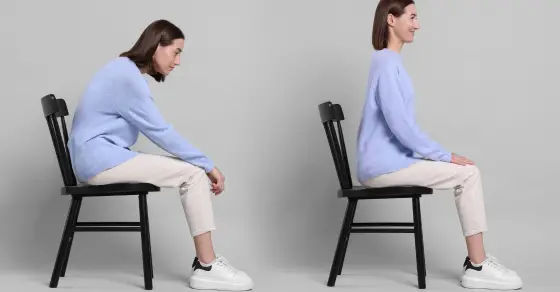
Most people assume posture problems start at the desk, the chair, or the spine.
But that’s not where it begins.
Posture starts at the feet.
Every step you take sends information up your body. Your feet talk to your knees. Your knees talk to your hips. Your hips talk to your spine. And your spine decides how your shoulders and neck position themselves throughout the day.
Now here’s the uncomfortable truth most people never hear:
The shoes you wear every day are quietly changing how you walk — and that change doesn’t stop at your feet.
The Hidden Way Shoes Control Your Body
When you put on a modern shoe, you’re not just covering your foot.
You’re stepping into a movement system that tells your body how to behave.
Most popular shoes today share a few design features:
- Elevated heels
- Thick cushioning
- Narrow toe boxes
- Stiff soles
These features feel good initially. Soft. Supportive. Comfortable.
But comfort can be deceptive.
Because the moment your heel is lifted — even slightly — your body adapts.
Your knees shift forward.
Your hips tilt.
Your spine compensates.
Your head moves out of alignment.
You don’t feel this happening.
But your body does.
Heel Elevation: The First Domino to Fall
Even a small heel lift changes your center of gravity.
When the heel is higher than the forefoot:
- Your weight shifts forward
- Your calves shorten
- Your knees stay slightly bent
- Your pelvis tilts anteriorly
This forward tilt forces the lower back to arch more than it should.
Over time, this creates a chain reaction:
- Tight hip flexors
- Overworked lower back
- Rounded shoulders
- Forward head posture
And because you’re wearing these shoes for hours every day, your body starts treating this altered position as “normal.”
That’s how posture problems become permanent.
Cushioning Disconnects You From the Ground
Your feet are packed with nerve endings.
They exist for one primary reason: feedback.
When your foot touches the ground, your brain receives information about balance, pressure, and position. That feedback allows your body to self-correct instantly.
Thick cushioning interrupts this process.
Instead of precise feedback, your brain receives muffled signals.
So your body compensates by:
- Slamming the foot harder
- Overstriding
- Locking joints instead of stabilizing naturally
The irony?
The more cushioning a shoe has, the harder many people hit the ground.
That extra impact doesn’t disappear — it just travels upward into the knees, hips, and spine.
Narrow Toe Boxes Break Natural Stability
Look at your foot.
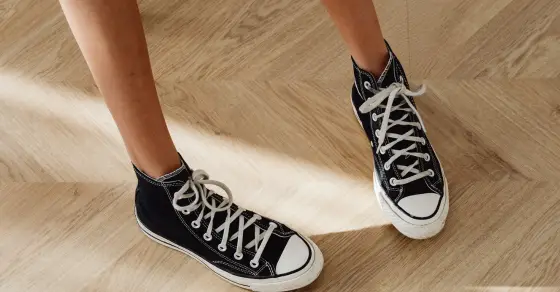
Now look at most shoes.
Your foot is widest at the toes — but most shoes taper inward.
This squeezes your toes together and prevents them from spreading naturally.
Why does that matter?
Because toe splay is essential for balance.
When your toes can’t spread:
- Your base of support shrinks
- Your arch weakens
- Your ankles become unstable
To compensate, your body tightens elsewhere — often in the calves, hips, or lower back.
Again, posture adapts downward.
Why Posture “Fixes” Often Fail
Many people try to fix posture from the top down:
- Braces
- Ergonomic chairs
- Standing desks
- Core exercises
These can help — but they often don’t last.
Why?
Because you’re trying to correct the symptom while reinforcing the cause.
If your feet are still forcing poor alignment, your body will always revert back.
It’s like straightening a crooked tower while the foundation is still tilted.
Your Walking Pattern Is Being Rewritten
Shoes don’t just affect standing posture.
They change how you walk.
Modern cushioned shoes encourage:
- Heel striking
- Longer strides
- Reduced ankle movement
This reduces the natural shock absorption that comes from the foot, ankle, and calf working together.
Instead, joints higher up absorb the load.
That’s why people often experience:
- Knee discomfort
- Hip tightness
- Lower back stiffness
- Neck tension
And they never suspect their shoes.
The Body Adapts — Even When It’s Bad
The human body is incredibly adaptable.
That’s both a gift and a curse.
When you wear restrictive footwear long enough, your body reshapes itself around it:
- Muscles weaken
- Tendons shorten
- Movement patterns change
Eventually, the shoe feels “necessary.”
Taking it off feels strange.
Uncomfortable.
Even wrong.
But that discomfort isn’t damage — it’s deconditioning being exposed.
What Happens When You Remove the Interference
When people switch to footwear that allows natural movement, something interesting happens.
At first:
- The feet work more
- Muscles wake up
- Balance feels different
Then gradually:
- Posture improves
- Gait becomes smoother
- Joint strain decreases
- Standing feels more effortless
Not because the shoe is “supporting” the body — but because it’s finally letting the body do its job.
Why Minimalist Shoes Make Sense
Minimalist footwear isn’t about suffering or toughness.
It’s about restoring natural mechanics.
Good minimalist shoes share a few traits:
- Zero heel drop
- Wide toe box
- Flexible sole
- Lightweight design
They don’t force alignment.
They allow it.
One of the most accessible brands doing this well is Xero Shoes.
They’re designed to protect your feet without interfering with movement.
Take the first step toward better movement and alignment →
This isn’t about switching overnight or throwing out everything you own.
It’s about giving your body the opportunity to move the way it was designed to.
Transition Slowly (This Part Matters)
If you’ve worn supportive shoes for years, your feet are weaker than you think.
Switching abruptly can overload tissues that haven’t worked properly in a long time.
The smart approach:
- Start with short walks
- Alternate with your current shoes
- Focus on walking, not running
- Let muscles adapt gradually
Discomfort is normal. Pain is not.
Listen to your body.
Posture Is a Ground-Up Process
Posture isn’t something you “hold.”
It’s something that emerges when the body is aligned correctly.
And alignment begins where you meet the ground.
Your shoes influence:
- How you stand
- How you walk
- How forces travel through your body
Ignoring that is like ignoring gravity.
Once you understand this, you can’t unsee it.
And you start asking a different question — not “Are these shoes comfortable?” but:
“Are these shoes helping my body move naturally… or quietly teaching it bad habits?”
If You’re Ready to Fix the Problem at the Source
At this point, you have two options.
You can keep wearing shoes that feel comfortable while slowly training your body into poor movement patterns — or you can choose footwear that actually respects how your body is designed to move.
That’s why I personally recommend minimalist shoes with a zero-drop sole, wide toe box, and flexible design.
They don’t force your posture.
They don’t mask problems.
They let your feet do what they were built to do.
One of the easiest ways to start is with Xero Shoes.
Unlike traditional cushioned footwear, Xero Shoes are built to:
- Keep your heel and forefoot level (no posture-altering lift)
- Allow your toes to spread naturally for balance and stability
- Let your feet feel the ground without unnecessary cushioning
- Move with your foot instead of controlling it
This combination helps restore natural walking mechanics — which means better alignment from the ground up.
If you’re curious to see their full range and decide what fits your lifestyle (walking, everyday wear, gym, or casual use), you can check them out here:
Give your feet the freedom they were designed for →
If you’re new to minimalist footwear, start slow.
Wear them for short walks at first.
Let your feet re-learn their job.
But once your body adapts, most people find it hard to go back — not because minimalist shoes are “comfortable,” but because their movement finally feels right.
Sometimes the best way to improve posture, reduce strain, and move better isn’t adding more support.
It’s removing what never should’ve been there in the first place.