In the modern marketplace, we often operate under what health advocates call the “illusion of safety.” We assume that if a product is manufactured by a multi-billion dollar corporation and sits on the shelf of a major national retailer, it has been rigorously vetted for human biological safety. However, a wave of high-profile litigation and independent laboratory testing suggests that our domestic environment is saturated with “hidden” carcinogens.
From the morning coffee that jumpstarts your day to the sunscreen intended to protect your children at the beach, some of the world’s most recognizable household names have faced legal fire for allegedly exposing consumers to known carcinogens. These are not just “trace amounts” of benign chemicals; we are talking about industrial solvents, heavy metals, and herbicides.
If you are looking to protect your family and your long-term endocrine health, you must look beyond the marketing and understand the litigation. Below are seven major companies that have recently faced legal action for cancer-linked contaminants—and the clean, vetted alternatives you can use to reclaim your hormonal sovereignty.
The “Dirty Seven”: Brands Facing Legal Fire for Carcinogenic Exposure
1. Starbucks: The Acrylamide Warning
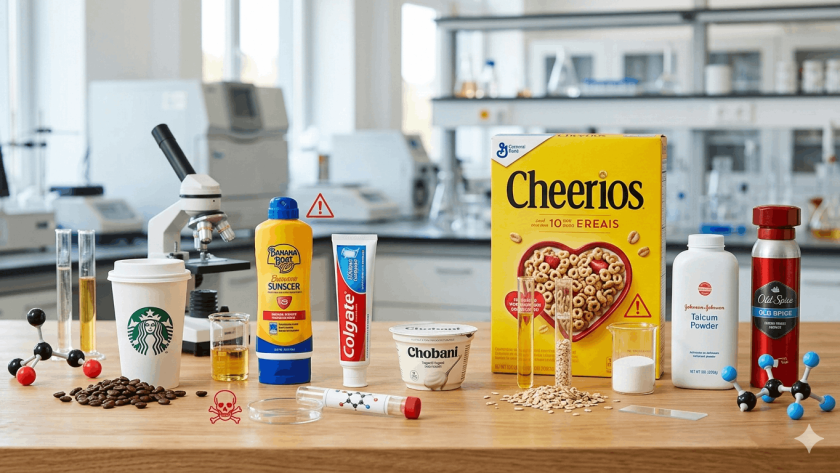
In a landmark case in California, Starbucks (along with other coffee retailers) was hit with a massive lawsuit under Proposition 65. The core of the claim centers on acrylamide, a chemical that forms naturally in coffee beans during the high-heat roasting process. Acrylamide is classified as a probable human carcinogen. While it is a byproduct of roasting, the lawsuit argued that Starbucks failed to provide clear warnings to consumers that they were daily ingesting a chemical linked to cancer risk. This case highlights a major issue in the food industry: even “natural” processing can create toxic byproducts if not carefully managed.
2. Banana Boat: Benzene Contamination
Sunscreen is marketed as a primary defense against skin cancer, but lawsuits against Banana Boat allege it may have been delivering a different kind of risk. Independent testing by labs like Valisure detected benzene—a notorious human carcinogen linked to leukemia and other blood cancers—in specific batches of their aerosol sunscreens. Benzene is an industrial solvent that has no business being in personal care products. The litigation claims that these contaminated products were sold for years without any disclosure of the risk.
3. Colgate: Trace Heavy Metals
Colgate has faced legal challenges regarding the presence of trace heavy metals, specifically lead, in certain toothpaste products. This is particularly alarming because the mucosal lining of the mouth is one of the most absorbent tissues in the human body. Daily exposure to lead, even in microscopic amounts, is a major concern for neurological health and systemic toxicity. Lawsuits argue that the company failed to ensure the purity of its raw materials and neglected to disclose the presence of these metals to the public.
4. Chobani: Phthalates and Endocrine Disruption
It isn’t just about what is in the food; it’s about what the food is wrapped in. Chobani has been challenged in court over alleged phthalate exposure. Phthalates are “plasticizers” used to make packaging more flexible, but they are known to leach into high-fat or acidic foods like yogurt. These chemicals are potent endocrine disruptors that have been linked to increased cancer risks and reproductive issues. Plaintiffs claim that these risks were kept hidden from the health-conscious public who buy these products for their perceived benefits.
5. Cheerios: Glyphosate Residue
A staple of the American breakfast, Cheerios became the center of a legal storm after independent reports found residues of glyphosate in the oats. Glyphosate is the active ingredient in the herbicide Roundup and has been labeled a “probable human carcinogen” by the World Health Organization (WHO). The lawsuits argue that parents should have been warned that their children’s primary breakfast cereal contained residues of a powerful herbicide used in industrial farming.
6. Johnson & Johnson: The Asbestos/Talc Crisis
This is arguably the most significant product liability case in history. J&J has faced tens of thousands of lawsuits claiming their talc-based baby powders were contaminated with asbestos. Asbestos is a deadly mineral that causes mesothelioma and has been linked to ovarian cancer. After decades of internal documents suggesting the company knew about the contamination risk, they finally transitioned to cornstarch-based alternatives, but only after multi-billion dollar settlements were reached.
7. Old Spice: Benzene in Aerosol Deodorants
Following the same pattern as the sunscreen industry, the personal care giant Old Spice faced lawsuits after benzene was allegedly detected in their aerosol deodorants and body sprays. When you use an aerosol, the particles are fine enough to be inhaled directly into the lungs, allowing contaminants like benzene to enter the bloodstream instantly, bypassing the digestive system’s natural filtration.
The Clean Living Protocol: Vetted Alternatives
You do not have to be a victim of industrial negligence. There are independent, high-integrity brands that prioritize purity and conduct the kind of rigorous third-party testing that ensures no carcinogens reach your body. Here are the top vetted products from our “Drop Sheet” to replace the “toxic staples” in your home.
1. Primal Life Organics: The Pure Oral Care Swap
If you are concerned about heavy metals like lead in commercial brands like Colgate, the single best move you can make is switching to Primal Life Organics. Instead of synthetic fluoride and industrial fillers, they use hydroxyapatite and bentonite clay to remineralize your teeth naturally. It is an “Earth-based” formula that is clean enough to eat, meaning you never have to worry about chemical exposure during your morning routine.
2. Ava Jane’s Kitchen: Plastic-Free Mineral Support
The Chobani phthalate lawsuit highlights why you must be careful with how your food is packaged. Ava Jane’s Kitchen provides high-quality, plastic-free sea salt that is harvested with purity in mind. Unlike mass-market table salts that are processed with anti-caking agents and industrial chemicals, this salt is a raw, mineral-dense superfood that avoids the plastic-leaching issues of major brands.
3. Clearly Filtered: Your Defense Against Glyphosate and PFAS
Since chemicals like glyphosate (found in Cheerios) and heavy metals (found in Colgate) often end up in our municipal water supply, a high-quality filter is your first line of defense. Clearly Filtered uses advanced technology designed to target and remove these specific industrial contaminants that standard “pitcher” filters leave behind.
4. Mito Red Light: Healing Without the Chemicals
While brands like Banana Boat are being sued for benzene in their “protective” creams, you can support your skin’s natural resilience and cellular repair using Mito Red Light therapy. Red and near-infrared light help repair environmental damage at the mitochondrial level without the need for toxic aerosol sprays.
- Explore Mito Red Light Here (Use code: healthywildfree)
5. Nads Underwear: Protecting the Endocrine System
The Chobani lawsuit reminds us how sensitive our endocrine systems are to plastics (phthalates). Your skin absorbs what it touches, and for men, the groin is a high-absorption area. Most modern underwear is made of synthetic polyester (plastic). Nads Organic Underwear provides GOTS-certified organic cotton protection, ensuring you aren’t wrapping your endocrine system in plastic all day.
- Get Nads Organic Underwear Here (Use code: HealthyWildFree)
6. Purity Coffee: Low-Acrylamide Roasting
If you want the benefits of coffee without the acrylamide concerns seen in the Starbucks litigation, Purity Coffee is the answer. They use a specialized roasting process specifically designed to minimize acrylamide while maximizing antioxidants. Every batch is third-party tested for toxins, molds, and heavy metals.
7. Codeage: Vetted Supplement Purity
Instead of relying on mass-market “health” foods that may contain undisclosed residues, use Codeage for your nutritional foundations. They are known for their rigorous testing standards and high-potency, clean formulations that avoid the fillers and “natural flavors” found in big-box supplements.
- Shop Codeage Here (Use code: HEALTHYWILDFREE)
Conclusion: How to Navigate a Toxic World
The lawsuits against companies like Starbucks, Johnson & Johnson, and Colgate serve as a wake-up call. We cannot outsource our health to corporations that prioritize the bottom line over biological purity.
Building a “toxin-free” lifestyle is about consistent reduction. Every time you swap a toxic, litigated brand for a vetted, organic alternative, you reduce your body’s total toxic load. You give your liver and kidneys a chance to catch up, and you protect your endocrine system from synthetic disruption.
Take Control of Your Household Today:
- Oral Health: Primal Life Organics
- Pure Coffee: Purity Coffee
- Water Filtration: Clearly Filtered
- Organic Clothing: Nads Organic Underwear
- Clean Minerals: Ava Jane’s Kitchen
By supporting independent, transparent companies, you are voting for a future where health is the priority. Make the switch today and live healthy, wild, and free.