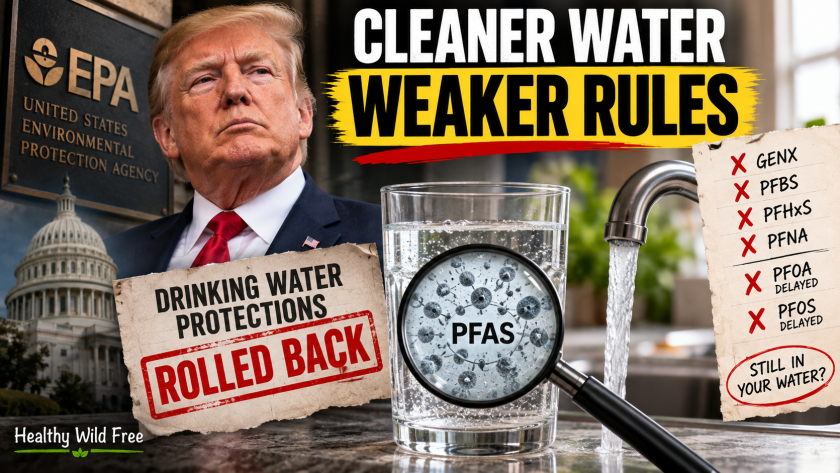
On May 18, 2026, the EPA made an announcement that should have dominated headlines for weeks. Instead, it barely registered outside of environmental policy circles. The agency confirmed it would roll back federal drinking water protections for several PFAS “forever chemicals,” delay enforcement on two more, and eliminate a filtration requirement, all while describing the move as a “scientifically sound” step that offers “real solutions” for reducing Americans’ PFAS exposure.
If that framing sounds contradictory, that’s because a lot of scientists, environmental groups, and even some of the administration’s own MAHA-aligned supporters think it is too.
Watch the Full Investigation Before You Read On
Before we get into exactly what changed and why it matters, there’s a documentary that goes deeper into the gap between the MAHA movement’s promises and the policy decisions actually being made in Washington than any single article can. If you want the fuller picture, it’s worth watching first.
Click here to watch the MAHA film free
Click here to watch the MAHA film free
What “Forever Chemicals” Actually Are, and Why They Matter
Before diving into the policy specifics, it’s worth understanding exactly what’s at stake. PFAS, short for per- and polyfluoroalkyl substances, is a family of nearly 15,000 human-made chemicals that have been used since the 1940s in everything from non-stick cookware to stain-resistant carpet, waterproof clothing, firefighting foam, food packaging, and cosmetics.
They’ve earned the nickname “forever chemicals” because of a chemical bond so strong it doesn’t break down naturally, not in the environment, not in water systems, and not in the human body once it’s absorbed. Studies have found PFAS in the blood of nearly every person tested in the United States. Once these chemicals enter a water supply, they tend to stay there indefinitely unless actively filtered out.
That persistence is exactly why the Biden administration’s 2024 drinking water rule was considered such a milestone. It marked the first time in 30 years the EPA had set a new binding drinking water standard for any contaminant, and it was built on the conclusion that there is no truly safe level of exposure to several of these chemicals.
What the EPA Actually Changed in May 2026
Here’s exactly what’s changing, broken down chemical by chemical, because the details matter more than the headlines suggest:
Four chemicals, fully rescinded: GenX, PFBS, PFHxS, and PFNA will no longer have enforceable federal drinking water limits at all. Water utilities will no longer be legally required to install filtration systems to remove them, meaning any reduction in these chemicals going forward depends entirely on utilities choosing to act voluntarily.
Two chemicals, deadline pushed back: PFOA and PFOS, widely considered the two most well-studied and harmful PFAS compounds, will keep their existing limit of 4 parts per trillion. However, water systems now have until 2031 to come into compliance, a full two years later than the original 2029 deadline.
EPA Administrator Lee Zeldin has defended the rollback on procedural grounds, arguing the Biden-era rule was finalized too quickly and didn’t properly follow requirements under the Safe Drinking Water Act, leaving it vulnerable to legal challenges from water utilities and industry groups. He’s maintained that the four rescinded chemicals still matter and may eventually receive standards as strict, or stricter, than before, once the agency redoes the rulemaking process in a way that can withstand a court challenge.
Legal experts see a more significant problem here. The Safe Drinking Water Act includes what’s known as an “anti-backsliding” provision, language specifically designed to prevent regulators from weakening existing water protections once they’ve been established. Multiple environmental law groups have already signaled this rollback is likely to face a direct legal challenge on exactly that basis.
How Many Americans This Actually Affects
This isn’t a narrow technical adjustment buried in a regulatory filing. According to Environmental Working Group data, PFAS chemicals have already contaminated the tap water supplies of at least 176 million Americans, more than half the country. Separate reporting from Earthjustice puts confirmed contamination at a minimum of 16 million people across 33 states and Puerto Rico specifically, with groundwater contamination confirmed in at least 38 states nationwide.
The scale of exposure is part of why this story matters so much more than its media coverage suggests. Most Americans have no idea whether their own water supply is among those affected, since testing and disclosure requirements vary significantly by state and by water utility.
Why Health Experts Are Raising Alarms
Research has linked PFAS exposure to a wide and genuinely concerning range of health effects. Studies have connected these chemicals to certain cancers, including kidney and testicular cancer, thyroid hormone disruption, weakened immune response in children, including reduced vaccine effectiveness, reproductive difficulties including reduced fertility, elevated cholesterol, and low birth weight in infants.
The Biden-era EPA’s determination that there is no safe level of exposure to several PFAS compounds wasn’t a political statement, it was based on a body of toxicological research showing measurable health effects at extremely low concentrations, far lower than regulators had assumed for most other water contaminants.
David Andrews of the Environmental Working Group has been blunt about where the science stands, noting that the evidence on PFAS harm keeps getting stronger with each new study, not weaker, which is exactly why he and other researchers argue this rollback moves policy in the wrong direction at the wrong time.
The MAHA Contradiction at the Center of This Story
Here’s where this story becomes genuinely strange, and why it’s generating so much frustration among the EPA’s own ideological allies. The agency didn’t just quietly announce this rollback, it explicitly framed the decision as reaffirming its commitment to the Make America Healthy Again movement. HHS Secretary Robert F. Kennedy Jr. was directly involved in the announcement alongside Administrator Zeldin.
For a movement whose entire public identity has been built around distrust of chemical contamination in food, water, and everyday consumer products, this framing has landed badly with a meaningful share of its own supporters.
Liz Hitchcock, federal policy director at Toxic-Free Future, put it directly: communities are already paying for PFAS contamination with both their health and their tax dollars, making this exactly the wrong moment to loosen protections rather than strengthen them.
Julia Cohen of the Plastic Pollution Coalition raised an even sharper point, noting that only six of the nearly 15,000 known PFAS chemicals have ever had drinking water standards in the first place, a tiny fraction of the total problem, and that this rollback weakens even that narrow slice of protection rather than expanding it as promised.
To be fair to the agency’s position, the EPA has paired this rollback with close to $1 billion in new grant funding aimed at helping communities address PFAS and other water contaminants. Whether that funding meaningfully offsets the removal of binding federal standards is a question likely to be debated for months. The public comment period on the proposed rule closed on July 20, 2026, and a final rule has not yet taken effect.
What MAHA’s Own Advocates Are Saying
This isn’t a story being pushed only by traditional environmental groups. Several prominent MAHA-aligned voices, the same coalition that helped propel Kennedy into his current role, have expressed real frustration with the direction of federal environmental policy over the past year, arguing that officials with ties to the chemical and agricultural industries have been placed into key regulatory positions, undercutting the movement’s original promises rather than delivering on them.
That frustration matters politically, not just symbolically. A coalition built substantially on trust that this administration would take contamination seriously is now watching binding protections get walked back, while being told it’s a win. For a movement that helped deliver real political momentum around exactly this issue, the gap between rhetoric and regulatory action is becoming harder to paper over with press releases.
How PFAS Ends Up in Drinking Water in the First Place
Understanding how these chemicals get into tap water in the first place helps explain why this rollback matters so much to so many communities. PFAS contamination typically traces back to a handful of common sources: industrial manufacturing sites that used PFAS in production processes, military bases and airports where PFAS-containing firefighting foam was used for decades in training exercises, and wastewater treatment plants that weren’t designed to filter these chemicals out before returning treated water to the environment.
Once PFAS enters groundwater or a surface water source that feeds a municipal water system, it doesn’t stay contained to that original source. It moves through the water table, sometimes traveling significant distances from the original contamination site, which is part of why communities with no obvious industrial history can still end up with contaminated water supplies. This is also why binding federal standards, rather than a patchwork of state-by-state rules, mattered so much to public health advocates in the first place. Contamination doesn’t respect state lines, and neither does groundwater.
The Broader Pattern Behind This Decision
This rollback doesn’t exist in isolation. It’s part of a broader pattern of regulatory rollbacks across multiple environmental protections over the past year, something environmental law groups have been tracking closely as a trend rather than a series of isolated decisions. Understanding that broader pattern is part of why this specific story has drawn so much frustration from advocates who otherwise might have viewed a single rule change as a routine administrative matter.
What You Can Actually Do About Your Own Water Right Now
Regardless of how the federal rulemaking process ultimately plays out, and regardless of the legal challenges likely still ahead, you don’t have to wait for Washington to protect your own household. Here’s what’s actually within your control today:
- Check your water utility’s most recent Consumer Confidence Report. Utilities are required to disclose detected contaminants, including PFAS levels where testing has occurred, in these annual reports.
- Use a certified filtration system. Not all filters remove PFAS. Look specifically for systems tested and certified against PFAS reduction standards, since standard carbon filters vary widely in effectiveness.
- Get your water independently tested if you’re on a private well. Private wells aren’t covered by these federal standards at all, and well owners are entirely responsible for their own water safety.
- Reduce PFAS exposure from other sources, not just drinking water. Non-stick cookware, stain-resistant fabric treatments, and certain cosmetics and food packaging are all common exposure pathways worth being aware of.
- Stay engaged with the public comment and legal process. The EPA’s final rule isn’t locked in, and legal challenges citing the Safe Drinking Water Act’s anti-backsliding provision are already anticipated.
Why Filtration Matters More Than Ever Right Now
With four PFAS chemicals losing their enforceable federal limits entirely, and two more getting a two-year compliance extension, the responsibility for actually reducing PFAS exposure is shifting more heavily onto individual households than it’s been in years. That’s an uncomfortable reality, but it’s also an actionable one.
Many households have already started addressing this directly rather than waiting on regulatory timelines that may take years to resolve, especially given the legal challenges this rollback is likely to face. Clearly Filtered offers water filtration systems specifically tested to reduce PFAS and other contaminants, giving households a way to address this issue directly at home rather than waiting to see how the federal rulemaking and court challenges play out. Use code Welcome10 at checkout.
The Bottom Line
The EPA is calling this rollback a win for the MAHA movement. Many of the scientists, environmental groups, and grassroots MAHA supporters who’ve spent years fighting for exactly these protections don’t see it that way, and they’ve said so publicly and directly.
What’s certain, regardless of how the political fight over framing continues, is this: fewer binding federal drinking water requirements exist today for PFAS chemicals than existed a year ago, and millions of Americans are still drinking water with contamination levels that regulators only recently determined had no safe threshold at all. Whether that changes through the legal challenges ahead, through the public comment process, or not at all, is likely to remain one of the more consequential environmental health stories of the year, even if it hasn’t gotten the attention it deserves so far.