Since Robert F. Kennedy Jr. was confirmed as Health and Human Services Secretary in February 2025, he’s moved faster and more aggressively on vaccine policy than any health secretary in modern U.S. history. Some changes have taken effect. Others were blocked in court. Others are still just proposals. Sorting out what’s actually changed, what’s been challenged, and what’s still coming requires tracking a lot of moving pieces, so here’s the complete, factual timeline in one place.
Why the Vaccine Schedule Matters and How It’s Normally Set
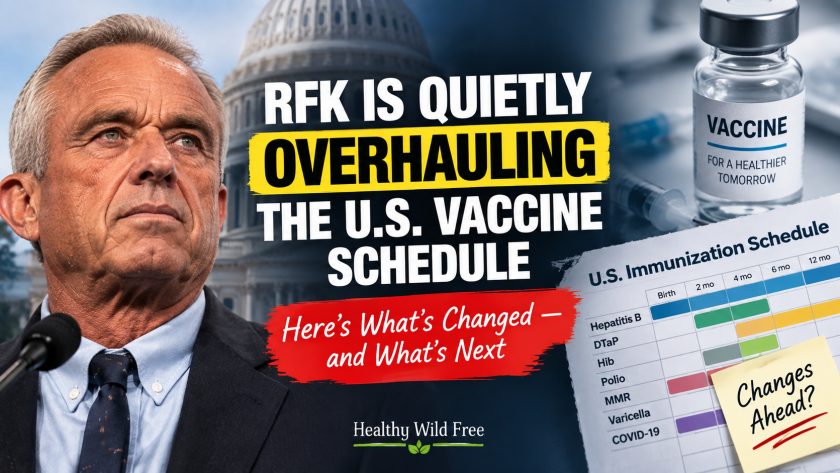
Before diving into the specific changes, it’s worth understanding the system Kennedy is restructuring. The U.S. childhood immunization schedule, the familiar grid of colored bars pediatricians share with new parents, has existed as a unified national standard since 1995, when federal health officials and major medical organizations first agreed on a coordinated set of recommendations. Since then, new vaccines have been added as science advanced, but the underlying review process remained fairly consistent for three decades: the Advisory Committee on Immunization Practices, a panel of independent medical and scientific experts, would review clinical trial data, safety monitoring data, and disease burden statistics before recommending changes to the CDC, which would then typically adopt those recommendations.
That process is precisely what’s been disrupted over the past year. Critics’ central concern isn’t necessarily that every individual change Kennedy has made is medically indefensible in isolation, it’s that the traditional, evidence-based review process that historically vetted these decisions has been substantially bypassed or restructured, which is part of why the March 2026 court ruling specifically focused on whether the process itself was lawful, not solely on the substance of any single recommendation.
Watch the Full Investigation Before You Read On
Before getting into the full timeline, there’s a documentary that covers the broader institutional dynamics behind these vaccine policy changes in more depth than a single article can. Worth watching alongside this piece.
Click here to watch the MAHA film free
Click here to watch the MAHA film free
The Complete Timeline
August 2025 — COVID-19 vaccine access restricted. Kennedy announced the COVID-19 vaccine was no longer approved for healthy adults under 65, narrowing eligibility from the general population to older adults and people with specific high-risk conditions.
Late summer 2025 — CDC Director Susan Monarez fired. Kennedy dismissed the CDC director after she reportedly refused to sign off on his proposed changes to the childhood vaccine schedule. Senator Elizabeth Warren publicly pressed Kennedy on this decision during a Senate Finance Committee hearing, calling for his resignation.
December 2025 — Newborn hepatitis B recommendation dropped. The CDC rolled back its decades-long recommendation that all newborns receive their first hepatitis B vaccine dose at birth, without presenting new safety evidence contradicting the vaccine’s established safety record.
December 2025 — CDC website adds autism-related claim. The CDC posted new language on its website addressing vaccines and autism, in a way that critics said elevated a widely debunked claim linking vaccines to autism. Kennedy told the New York Times he had personally directed the change, stating that the phrase “vaccines do not cause autism” is “not supported by science.” This directly contradicts a large body of peer-reviewed research, including large-scale population studies involving millions of children across multiple countries, which has consistently found no causal link between vaccines and autism. Major medical organizations, including the American Academy of Pediatrics, have publicly reaffirmed that consensus in response to this change.
January 5, 2026 — Childhood vaccine schedule cut from 18 diseases to 11. In what NBC News and other outlets described as an unprecedented move, the CDC announced an overhaul of the childhood immunization schedule, reducing routinely recommended childhood vaccines from 18 to 11 diseases, restructuring the schedule to more closely resemble Denmark’s. The COVID-19 vaccine was removed from the recommended childhood schedule entirely. HHS officials framed the change as an effort to rebuild public trust in the immunization system.
January 6, 2026 — Medical establishment pushes back. The American Medical Association issued a statement warning that altering longstanding vaccine recommendations without a robust, evidence-based review process undermines public trust and puts children at unnecessary risk of preventable disease. Public health experts, writing in outlets including The Conversation, noted that Kennedy’s own justification, a comparison to Denmark’s vaccine schedule, overlooked major structural differences between the two countries: Denmark has roughly 6 million people, universal healthcare, and a national patient registry tracking every individual, while the U.S. has 330 million people, tens of millions of uninsured residents, and a fragmented system where patients frequently change providers.
March 16, 2026 — Federal judge rules ACIP overhaul unlawful. A federal judge concluded that Kennedy’s restructuring of the CDC’s Advisory Committee on Immunization Practices, the independent panel that has historically reviewed vaccine safety data and shaped official recommendations, was not conducted lawfully. Critically, the ruling also invalidated the panel’s earlier votes downgrading recommendations for both the hepatitis B newborn vaccine and COVID-19 vaccines, meaning those specific changes lost their legal standing, at least temporarily, pending further action.
June 24, 2026 — New ACIP charter issued. Following the court ruling, the CDC posted a revised charter for the advisory committee, stating members would “collectively represent a balanced range of scientific, clinical, and public health expertise.” Critics have expressed concern that this broadly worded requirement could allow Kennedy to appoint panel members with limited vaccine-specific expertise, while technically satisfying the charter’s language.
August 5, 2026 — First mRNA flu vaccine approved. In a development that cuts against the narrative of blanket vaccine skepticism, the FDA approved the first flu vaccine using mRNA technology under Kennedy’s HHS, suggesting the administration’s approach isn’t uniformly restrictive across all vaccine types or technologies.
August 21, 2026 — Request for Information on new vaccine categories. HHS posted a formal Request for Information proposing new vaccine classification categories, including one description STAT News reported as covering vaccines “recommended, but not during infancy,” a potential signal that further schedule restructuring, specifically around timing rather than outright removal, may be coming. The public comment period runs 30 days from posting. This is a proposal seeking feedback, not a finalized policy change.
September 2026 — New CDC director affirms vaccine safety publicly. Erica Schwartz, installed as the new CDC director, stated she “absolutely” believes vaccines are safe and effective, a notable public position given the broader direction of the department she now leads, and one that suggests real internal tension exists between Kennedy’s stated views and at least some of his own senior appointees.
September 17, 2026 — Kennedy addresses anti-vaccine conference as HHS Secretary. Kennedy gave a keynote address at a conference hosted by Children’s Health Defense, the anti-vaccine advocacy organization he founded before entering government, telling attendees that Americans concerned about vaccines “have a friend at the White House.”
What’s Actually Changed vs. What’s Pending or Blocked
Given how many moving pieces are involved, here’s the clearest possible breakdown of where things currently stand:
Confirmed and currently in effect: The narrowed COVID-19 vaccine eligibility for healthy adults under 65, and the restructured childhood schedule listing 11 rather than 18 recommended diseases.
Legally invalidated, at least temporarily: The ACIP votes downgrading hepatitis B newborn vaccination and COVID-19 vaccine recommendations were specifically ruled unlawful by a federal judge in March 2026. Their current enforceable status depends on further agency action following that ruling, and is worth watching closely since it could change again.
Still just a proposal: The August 2026 Request for Information on new vaccine categories has not resulted in a finalized policy change as of publication. It’s a formal step toward possible future changes, not a change itself.
Contested, not a policy change but worth flagging: The CDC’s December 2025 website language on vaccines and autism represents a significant public communication shift from the agency’s prior position, but it is not itself a change to any specific vaccine recommendation or schedule.
Why This Story Deserves a Careful, Non-Partisan Read
This is genuinely one of those stories where an honest breakdown serves your family better than a version flattened to fit either a pro- or anti-Kennedy narrative. Some of what’s happened reflects Kennedy following through on specific promises he made before taking office. Some of it has been found legally deficient by a federal court. Some of it remains a proposal that could still change substantially, or not happen at all, based on public feedback and further review. And at least one specific claim promoted by the CDC under Kennedy’s direction, that vaccines cause autism, runs directly counter to the weight of existing peer-reviewed scientific evidence, a fact worth knowing regardless of how you feel about the broader policy direction.
What This Means for Your Family Right Now
Given how much of this remains in flux, here’s practical guidance for navigating it:
- Check your specific state’s requirements, not just federal recommendations. School vaccination requirements are generally set at the state level, and many states have not adopted the federal schedule changes, meaning your state’s actual requirements may differ from the new federal recommendation.
- Talk to your pediatrician directly about your child’s specific schedule, since individual pediatric practices and children’s hospitals have, in many cases, continued recommending the previous, broader schedule based on their own clinical judgment and the underlying safety data, which hasn’t itself changed.
- Watch the ACIP situation closely, since the panel’s legal status and membership remain actively contested, and further changes to official recommendations could follow.
- Don’t assume the RFI proposal reflects finalized policy. It’s a request for public feedback, and the 30-day comment period means there’s still an opportunity to have input if you have a view on it.
- Rely on your own child’s doctor and established peer-reviewed research for medical decisions, rather than any single political figure’s public statements, regardless of which side of this debate they’re on.
Supporting Your Family’s Overall Immune Health
Regardless of where the vaccine schedule debate ultimately lands, supporting your family’s foundational immune health remains fully within your control.
HealthyCell offers a broad-spectrum daily multivitamin designed to help cover common nutritional gaps that support normal immune function. Use code healthywildfree at checkout.
For households focused on general wellness support, Qualia offers formulas designed to support overall physical resilience as part of a daily routine. Use code HEALTHYWILDANDFREE at checkout.
To be clear, neither of these products is a substitute for medical care, and neither prevents or treats any specific vaccine-preventable illness. Decisions about vaccination should be made with your own doctor, based on your family’s specific health history and circumstances.
The Bottom Line
Kennedy has made real, documented changes to U.S. vaccine policy since taking office, some of which remain in effect, some of which have been legally invalidated, and some of which are still just proposals under public review. This is an unusually fast-moving, unusually contested area of federal health policy, and it’s likely to keep changing in the months ahead. The most reliable approach for your own family is tracking the specific, verified changes, as outlined here, rather than relying on either alarmed or reassuring characterizations from any single source, including this one. Given how quickly this area of policy has moved over the past year, and how many pieces remain legally or procedurally unresolved, this is a story worth bookmarking and revisiting rather than treating any single snapshot, including this one, as the final word.