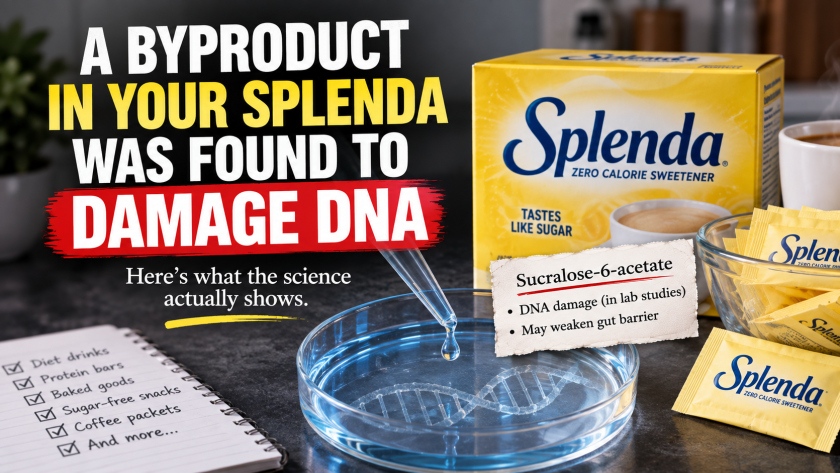
Sucralose, sold under the brand name Splenda, is one of the most widely used artificial sweeteners in the world, found in everything from diet soda to protein bars to your morning coffee packet. A body of research building since 2018 has identified a specific compound related to sucralose, called sucralose-6-acetate, that damages DNA and weakens the gut barrier in laboratory studies. That research resurfaced in health media again this week, and it deserves a clear-eyed look, not a panic headline and not a dismissal.
Here’s exactly what the science shows, where the legitimate concern actually sits, what European regulators concluded after reviewing this same evidence in 2026, and a practical list of where sucralose commonly hides in your kitchen.
Watch the Full Investigation Before You Read On
Before getting into the study details, there’s a documentary that explores food additive safety and the gap between industry claims and independent research in more depth than a single article can cover. Worth watching alongside this piece.
Click here to watch the MAHA film free
Click here to watch the MAHA film free
What Sucralose-6-Acetate Actually Is
To understand this story, it helps to understand the distinction at its center: sucralose-6-acetate is not the same thing as sucralose itself. It’s a chemically related compound, an impurity that can form during sucralose’s manufacturing process and remain in the finished product, and it also appears to form as a metabolite when the body processes sucralose after consumption.
Researchers led by Susan Schiffman at North Carolina State University and the University of North Carolina at Chapel Hill first identified this compound in earlier work published in 2018, after finding fat-soluble compounds in the urine and feces of rats given sucralose, evidence the team interpreted as the sweetener being chemically altered inside the animals’ bodies.
What the Original Study Found
The team’s follow-up research, published in 2023 in the Journal of Toxicology and Environmental Health, Part B, went further. Using human blood cells and lab-grown human gut tissue, the researchers tested sucralose-6-acetate directly. Their findings, in Schiffman’s own words, established that sucralose-6-acetate is genotoxic, meaning it effectively broke apart DNA in the cells exposed to it. Validated laboratory assays identified the compound as clastogenic, meaning it causes DNA strand breaks, and a separate micronucleus assay, which detects chromosome damage, confirmed the same effect.
The gut tissue findings were equally notable. When researchers exposed lab-grown gut epithelial tissue, the kind of tissue that lines your intestinal wall, to both sucralose and sucralose-6-acetate, both chemicals reduced the tissue’s electrical resistance, a standard measure of how tightly sealed the gut barrier is. That reduction indicates a leakier barrier, allowing larger molecules to pass through than normally would, a condition often referred to as “leaky gut.” The study also found trace amounts of sucralose-6-acetate, up to 0.67 percent, in commercial sucralose samples purchased directly off store shelves, meaning some exposure to this compound doesn’t require the body to metabolize sucralose at all, it can already be present in the product itself.
What This Study Did NOT Establish
Here’s where the nuance genuinely matters, and where a lot of coverage of this research, in both directions, tends to overreach. This study was conducted using isolated human cells and lab-grown tissue, not living human beings consuming sucralose in real-world amounts. As the researchers themselves have acknowledged, laboratory systems like these cannot fully replicate how a whole, living human body actually processes and responds to a substance. Finding that a compound damages DNA in a petri dish is a meaningful signal worth taking seriously, but it is a different claim than “ordinary sucralose consumption has been shown to damage DNA in people,” a claim this research does not make and was not designed to test.
What European Regulators Concluded in 2026
This is the part of the story that’s often left out entirely, and it’s essential to an honest picture. In February 2026, the European Food Safety Authority published a comprehensive reassessment of sucralose that directly considered this body of research, including the DNA damage signals tied to sucralose-6-acetate.
After weighing the laboratory, animal, and other available evidence, EFSA’s panel concluded that sucralose’s use as a food additive did not raise a genotoxicity concern. The agency retained sucralose’s existing acceptable daily intake of 15 milligrams per kilogram of body weight per day, and found that estimated dietary exposure across the population groups it assessed remained below that threshold. In the United States, sucralose also remains approved by the FDA for use as a food sweetener, and the agency has not issued any formal safety response specific to the sucralose-6-acetate research as of publication.
It’s worth being precise about where EFSA did express some caution, since it wasn’t a blanket dismissal either. The agency declined to extend sucralose’s approval to certain fine bakery applications, specifically because heating sucralose during baking can generate additional chlorinated breakdown products that haven’t been as thoroughly studied. That’s a genuinely narrower, more targeted concern than the sweeping “DNA damage confirmed” framing this story sometimes gets in social media shares.
Why the Concern Isn’t Nothing, Either
To be fair to the researchers whose work started this conversation, dismissing their findings entirely would be its own kind of oversimplification. Independent policy analysis of this research has noted that the study’s own calculations suggested a single daily sucralose-sweetened beverage could deliver sucralose-6-acetate in quantities exceeding the threshold of toxicological concern for genotoxic substances, a standard regulatory benchmark set at 0.15 micrograms per person per day. That’s a specific, quantifiable calculation worth taking seriously, even as it exists alongside EFSA’s broader conclusion that current exposure levels don’t raise an overall safety concern under existing approved uses.
The honest summary is this: legitimate, published, peer-reviewed research has identified a real signal worth continued study and regulatory attention, particularly around manufacturing purity standards and heated applications. At the same time, the strongest available regulatory review of that same evidence, conducted in 2026 with full knowledge of these findings, did not conclude that ordinary sucralose consumption poses a confirmed genotoxicity risk to people. Both of those things are true at once, and neither erases the other.
Common Products That Contain Sucralose
If you want to check your own cupboard against this research regardless of where you land on the risk question, sucralose commonly appears in:
- Diet and zero-sugar sodas, including several major diet cola and soda brands
- Splenda-brand sweetener packets and baking blends
- Sugar-free gum and mints
- Protein bars and meal replacement shakes marketed as low-sugar or keto-friendly
- Flavored yogurts labeled “light” or “low sugar”
- Sugar-free syrups, including coffee flavor syrups
- Certain sugar-free or “no sugar added” baked goods and desserts
- Some children’s vitamins and chewable medications
- Certain toothpastes and mouthwashes
- Protein powders and pre-workout supplements labeled low-sugar or keto
Checking ingredient labels directly remains the most reliable way to know for certain, since “sucralose” must be listed by name under current labeling requirements, and it sometimes appears alongside other sweeteners in blended products rather than as the sole sweetening ingredient.
A Brief History of Sucralose and Why This Debate Keeps Resurfacing
Sucralose was discovered in 1976 and approved by the FDA in 1998, making it a relative newcomer compared to some other artificial sweeteners. It’s produced through a chemical process that replaces three hydroxyl groups on a sucrose molecule with chlorine atoms, which is part of why some critics have raised concerns about it independent of the sucralose-6-acetate research specifically, since chlorinated organic compounds have a mixed history in toxicology more broadly. It’s roughly 600 times sweeter than table sugar, which is why only small amounts are needed to sweeten food and beverages.
This isn’t the first time sucralose’s safety has come under renewed public scrutiny since its approval. Separate research over the years has examined sucralose’s effects on gut bacteria composition, blood sugar response, and metabolic health, with mixed and sometimes conflicting findings, a common pattern in nutrition science generally, where isolated studies often show effects that don’t consistently replicate across larger or differently designed studies. The sucralose-6-acetate research is notable specifically because it identifies a distinct chemical mechanism, DNA strand breakage in laboratory conditions, rather than the more commonly studied metabolic or gut microbiome questions, which is part of why it’s generated renewed attention each time it resurfaces in health media, including this week.
What to Do If You Want to Reduce Your Sucralose Intake
If this research is enough to make you want to reduce your household’s sucralose exposure, regardless of where the regulatory conclusions currently stand, a few practical options:
- Read labels on “sugar-free” and “diet” products specifically, since sucralose is one of several common artificial sweeteners and isn’t always the one used.
- Consider whole-food sweeteners in moderation as an alternative, such as small amounts of honey, maple syrup, or dates, which don’t carry this specific research question attached.
- Look into stevia or monk fruit-based products as alternative low-calorie sweeteners with a different safety research profile than sucralose.
- Be especially mindful of heated sucralose applications, like baked goods, given EFSA’s specific caution about chlorinated breakdown products forming under heat.
- Check children’s products carefully, including chewable vitamins and medications, since kids often consume proportionally more sweetened products relative to body weight than adults do.
- Don’t assume “natural” automatically means better, since some natural sweeteners carry their own considerations, like glycemic impact for honey and maple syrup, so weigh alternatives based on your specific health goals rather than the sucralose research alone.
Cleaner Alternatives Worth Considering
For households looking to reduce reliance on artificial sweeteners generally, a few well-regarded alternatives:
Boku Superfoods offers products sweetened with whole-food and plant-based ingredients rather than artificial sweeteners, for households looking for a cleaner-label option in smoothies and shakes. Use code HealthyWildFree at checkout.
The Bottom Line
The science here is genuinely more nuanced than either “Splenda is proven to destroy your DNA” or “there’s nothing to see here.” A specific, related byproduct of sucralose has demonstrated real, published genotoxic effects and gut barrier disruption in laboratory studies, findings worth continued scientific attention, particularly around manufacturing standards and heated food applications. At the same time, Europe’s most recent, most comprehensive safety review of this exact evidence concluded current sucralose use doesn’t raise a genotoxicity concern at typical exposure levels. Your family deserves both halves of that picture, not just the part that makes for the most alarming headline, and not just the part that makes for the most reassuring one. This is a research area worth continuing to watch, particularly as regulators consider whether manufacturing purity standards for sucralose-6-acetate impurities need tightening, and as more research potentially moves from laboratory cell studies toward studies that can better address how these findings translate, or don’t, into real human exposure and outcomes.