When the Trump administration unveiled its “Most-Favored-Nation” drug pricing policy, the pitch to Americans was simple and dramatic: tie what Medicare pays for prescription drugs to the lower prices other wealthy countries pay, and prescription costs could fall by as much as 80 percent. It sounded like exactly the kind of pharmaceutical industry accountability people have been demanding for years.
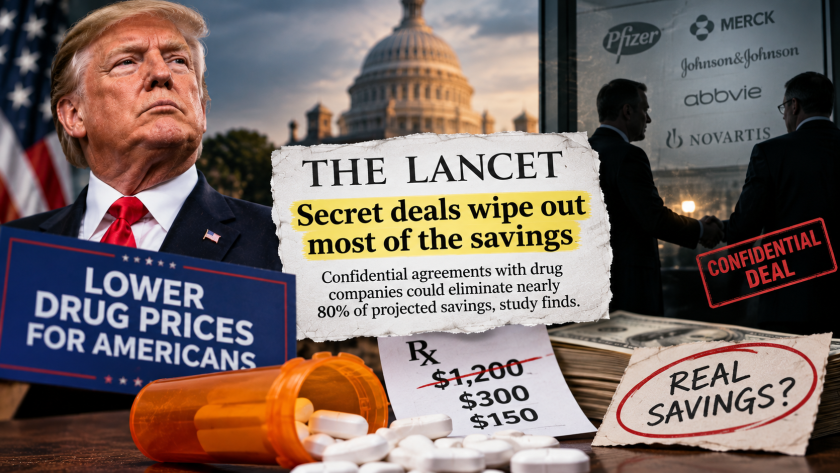
A new study published in The Lancet on September 13, 2026, tells a very different story about what’s actually happened behind the scenes. According to the research, confidential deals struck quietly between the administration and more than two dozen drug manufacturers could eliminate nearly 80 percent of the savings the policy was originally projected to deliver.
Watch the Full Investigation Before You Read On
Before getting into what the study actually found, there’s a documentary that explores this same pattern of public promises versus private dealmaking in more depth than a single article can cover. Worth watching alongside this piece.
Click here to watch the MAHA film free
Click here to watch the MAHA film free
What “Most-Favored-Nation” Pricing Was Supposed to Do
Medicare, the government health insurance program covering roughly 68 million older and disabled Americans, was historically barred from negotiating drug prices directly with manufacturers at all. That changed only in 2022, when the Inflation Reduction Act authorized Medicare to negotiate prices for a small number of high-cost medications.
The Trump administration’s Most-Favored-Nation policy goes considerably further, aligning what Medicare pays for brand-name drugs with prices charged in other high-income countries, adjusted for purchasing power. The administration has argued that pharmaceutical companies effectively subsidize discounted international prices by charging Americans far more for the same drugs, citing research showing U.S. consumers pay more than three times what other wealthy nations pay for brand-name medications, despite the U.S. representing less than 5 percent of the world’s population while funding roughly 75 percent of global pharmaceutical industry profits.
The policy operates through two specific payment models: GLOBE, which covers medicines administered in hospitals and clinics, and GUARD, which covers medications purchased at retail pharmacies. In their initial phase, covering roughly 25 percent of the Medicare program, researchers estimated the two models could cut Medicare drug spending by $5.2 billion, or 16 percent, under GLOBE, and $6.4 billion, or 18 percent, under GUARD.
What the Lancet Study Actually Found
The research, led by Dr. Thomas Hwang of Mass General Brigham and published in The Lancet, modeled the pricing policy’s real-world impact using data on 195 medicines, including international pricing data from countries like Australia. The findings on the policy’s underlying design were genuinely striking on their own: for roughly three in four medicines studied, the Medicare savings the policy would generate were worth almost four times that same drug’s entire annual sales revenue in the foreign country used to set its reference price.
That imbalance matters enormously, because it creates a powerful incentive for manufacturers to sidestep the policy entirely rather than absorb losses of that scale. And that’s exactly what the study suggests has been happening.
According to the researchers, the Trump administration has separately struck confidential agreements directly with pharmaceutical manufacturers, agreements that appear to exempt those companies’ medicines from the Most-Favored-Nation pricing requirements altogether. When the study’s authors modeled the impact of exempting the first 17 companies with announced agreements, they found it would cut the policy’s projected Medicare savings by 71 percent. Following a further round of deals announced August 31, 2026, bringing the total number of companies with agreements to 26, Dr. Hwang’s updated estimate pushed the projected loss even higher, to nearly 80 percent of the original expected savings.
Why This Matters: The Deals Themselves Aren’t Public
Perhaps the most important detail in this entire story, and the one most directly relevant to accountability, is this: the terms of these confidential deals have not been made public. Dr. Hwang put it plainly: because these deals aren’t public, it’s genuinely difficult for policymakers and the public to judge whether Most-Favored-Nation pricing is delivering what was originally promised.
This is worth sitting with. A policy sold to the public as a major, transparent win against pharmaceutical industry pricing power is now, according to independent peer-reviewed modeling, being substantially undermined by agreements the public isn’t allowed to see, negotiated with the same companies the policy was designed to hold accountable in the first place.
The Global Ripple Effect
The study also identified a second, less obvious consequence of the policy’s underlying structure, one that could affect patients well beyond U.S. borders. Because Medicare savings for many medicines dramatically exceed those drugs’ total sales in the reference countries used to set pricing, manufacturers have a strong financial incentive to respond by raising prices in those other countries, or delaying new drug launches there entirely, in order to avoid triggering steep Medicare rebate obligations back in the United States.
In other words, a policy built around comparing U.S. prices to those in other wealthy nations could end up distorting the very prices it’s using as its benchmark, potentially raising costs or limiting access to new medicines in countries that had nothing to do with the policy’s design.
What the Administration Says
To be fair to the administration’s position, officials have maintained that the overall program will still deliver meaningful savings, and the underlying legal framework represents a genuine expansion of Medicare’s negotiating leverage that didn’t exist before this policy. It’s also worth noting that Dr. Hwang’s nearly-80-percent figure is his own updated calculation based on the expanded 26-company deal count, not a number formally published within the peer-reviewed paper itself, an important distinction for anyone tracking exactly how this estimate was derived.
Still, the core finding, that confidential exemptions negotiated directly with the industry the policy targets are eating into the bulk of its projected benefit, comes from independent, peer-reviewed modeling, not partisan commentary, and hasn’t been meaningfully disputed by the administration on the substance.
How We Got Here: The Longer Fight Over Drug Pricing
This story sits within a much longer, bipartisan struggle to rein in prescription drug costs in the United States, a fight that’s spanned multiple administrations without a clean resolution. Americans have paid dramatically more for the same brand-name medications than patients in comparably wealthy countries for decades, a gap researchers and lawmakers on both sides of the aisle have pointed to repeatedly, even as specific policy solutions have remained politically contentious.
The 2022 Inflation Reduction Act marked the first real crack in that pattern, allowing Medicare to negotiate prices directly for a small, specific list of high-cost drugs for the first time in the program’s history. The Trump administration’s Most-Favored-Nation approach represents a far more sweeping expansion of that negotiating leverage, applying international price comparisons across a much broader range of medications rather than a short negotiated list.
That scale is exactly what makes this story significant. A narrow policy affecting a handful of drugs quietly losing some of its punch to industry dealmaking would be a modest story. A sweeping, headline policy explicitly sold to the public as a major structural fix losing up to 80 percent of its projected benefit to confidential side deals is a far more consequential one, and it’s why independent researchers felt compelled to model and publish these findings so quickly after the deals became public.
Why This Story Deserves More Attention Than It’s Gotten
This story broke less than 48 hours before this article was published, and coverage outside specialized health policy outlets has been limited so far. That’s worth noting on its own. A peer-reviewed study in one of the world’s most respected medical journals, finding that secretive industry deals may have quietly gutted a headline healthcare policy, is exactly the kind of institutional accountability story that deserves wide attention regardless of political alignment.
For an audience that has spent years learning to be skeptical of both Big Pharma’s pricing practices and government promises that don’t hold up under scrutiny, this story checks both boxes at once, and it’s backed by real, citable, peer-reviewed research rather than speculation.
What You Can Actually Do With This Information
Drug pricing policy is set at the federal level, and most individual households have limited direct leverage over how this specific fight resolves. Still, there are a few concrete things worth doing:
- Ask your own representatives about transparency for these deals. Since the confidential agreements themselves are the core accountability gap identified in the study, public pressure specifically for disclosure is a more targeted ask than opposing the underlying policy altogether.
- Follow independent trackers like KFF for ongoing, nonpartisan analysis of how Medicare drug pricing policy evolves, rather than relying on any single source’s framing.
- If you’re on Medicare, review your specific plan’s drug formulary regularly, since pricing policy changes can affect which medications are covered and at what cost from year to year.
- Talk to your pharmacist about generic and biosimilar alternatives where available, since these often remain unaffected by brand-name pricing negotiations entirely and can meaningfully reduce out-of-pocket costs regardless of how this policy fight resolves.
- Watch for follow-up reporting on which specific companies and drugs are covered by these confidential deals, since journalists and researchers are likely to continue digging into details the administration hasn’t voluntarily disclosed.
Supporting Your Health While Prescription Costs Stay Uncertain
With prescription drug pricing policy this unsettled, many households are also focusing more on foundational, preventive health habits that can reduce reliance on certain medications over time, particularly for manageable, lifestyle-related conditions.
Bioptimizers Magnesium offers a full-spectrum magnesium formula that many people incorporate as part of a broader approach to supporting healthy sleep, stress regulation, and cardiovascular function. Use code Healthywildfree at checkout.
For general nutritional support while navigating a healthcare system in flux, HealthyCell offers a broad-spectrum daily multivitamin designed to help fill common dietary gaps. Use code healthywildfree at checkout.
To be clear, neither of these products is a substitute for prescribed medication or medical guidance, particularly for anyone managing a diagnosed condition. Never stop or adjust a prescribed medication without talking to your doctor first.
The Bottom Line
Trump’s Most-Favored-Nation drug pricing policy was sold as a major win against pharmaceutical industry pricing power. Independent, peer-reviewed modeling now suggests that confidential deals cut directly with that same industry could eliminate nearly 80 percent of the savings originally promised, and the terms of those deals remain hidden from the public whose prescription costs are supposedly being protected. Whether that gap closes through greater transparency, congressional pressure, or continued research scrutiny is likely to remain one of the more important healthcare accountability stories to watch in the months ahead. For now, the peer-reviewed modeling stands as one of the clearest independent looks yet at the gap between a headline drug pricing promise and what’s actually unfolding behind closed doors, and it’s a gap worth watching closely as more details about these confidential arrangements potentially come to light.